About
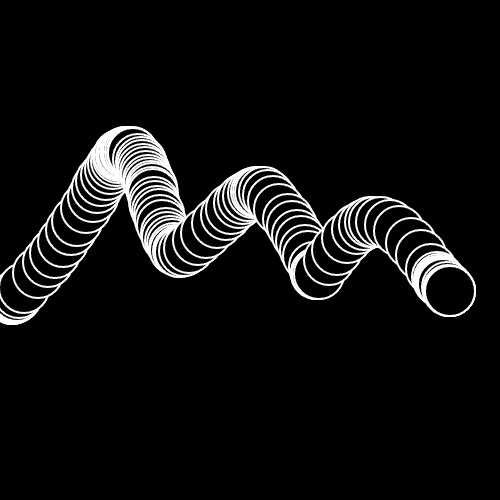
Generative Art. Plotted Graphics. Creative Coding and some more…
My Story
Founded in 2024, Divi Auto Parts has been serving automotive enthusiasts and professionals alike for [Number of Years] years. What started as a small family-owned business has grown into a leading destination for premium auto parts and accessories.
Our journey began with a simple mission: to make high-quality auto parts accessible to everyone, whether you’re a seasoned mechanic or a DIY enthusiast. Over the years, we’ve stayed true to this commitment, continuously expanding our product range and improving our services.
Lutoslawski is a generative artist working with algorithmic systems and pen-plotting technologies. His practice explores how structure, randomness, and material constraints interact to produce visual form.
Drawing inspiration from algorithmic composition, systems theory, and controlled aleatoricism, his work treats code not as a tool of automation, but as an expressive medium. Digital processes are often translated into physical artifacts through pen plotting, emphasizing the relationship between computational abstraction and material execution.
Thousands of satisfied customers served. Our passion for automotive excellence drives everything we do, from sourcing the highest-quality parts.
Ideas Behind
At Lutoslawski.xyz, we explore the intersection of mathematics, randomness, and artistic expression. Each piece is generated through custom algorithms and rendered digitally or with precision pen-plotting techniques. Our mission is to transform code into emotion—bridging systems and intuition.
The works presented under Lutoslawski.xyz investigate generative systems as a contemporary artistic language—one in which visual form emerges from the interplay between structure, probability, and constraint. Rooted in algorithmic processes, each piece is generated through custom-coded systems that define rules rather than fixed outcomes, allowing complexity and variation to arise organically within controlled parameters.
This practice situates itself within a lineage of computational and conceptual art, drawing parallels to twentieth-century explorations of chance, seriality, and indeterminacy. In particular, the influence of controlled aleatoricism—most notably articulated in algorithmic music composition—is translated into a visual context, where chance is neither arbitrary nor decorative, but structurally embedded within the work’s logic.
The translation of digital systems into physical form through pen-plotting is central to the curatorial framework. These plotted works emphasize the material consequences of computation: vector paths become inked gestures; abstract data becomes tactile trace. Minor deviations—ink density, paper texture, mechanical tolerance—introduce a second layer of variability, extending the generative process beyond the screen and into the physical world.
Rather than positioning algorithms as tools of automation or optimization, Lutoslawski.xyz treats code as a medium of expression and inquiry. The resulting works occupy a space between precision and unpredictability, system and intuition, machine logic and human perception. Collectively, they invite viewers to consider how meaning, authorship, and aesthetics can emerge from procedural systems—revealing generative art not as an absence of intention, but as a reconfiguration of it.
Wide Selection
Lorem ipsum dolor sit amet, consectetur adipiscing elit. Donec sed finibus nisi, sed dictum eros.
Family Owned
Quisque aliquet velit sit amet sem interdum faucibus. In feugiat aliquet mollis etiam tincidunt ligula.
Satisfaction Guaranteed
Luctus lectus non quisque turpis bibendum posuere. Morbi tortor nibh, fringilla sed pretium sit amet.
Fair Prices
In non pulvinar purus. Curabitur nisi odio, blandit et elit at, suscipit pharetra efficitur elit.
Mission
At Lutoslawski.xyz, we explore the intersection of mathematics, randomness, and artistic expression. Each piece is generated through custom algorithms and rendered digitally or with precision pen-plotting techniques. Our mission is to transform code into emotion—bridging systems and intuition.
The works presented under Lutoslawski.xyz investigate generative systems as a contemporary artistic language—one in which visual form emerges from the interplay between structure, probability, and constraint. Rooted in algorithmic processes, each piece is generated through custom-coded systems that define rules rather than fixed outcomes, allowing complexity and variation to arise organically within controlled parameters.
This practice situates itself within a lineage of computational and conceptual art, drawing parallels to twentieth-century explorations of chance, seriality, and indeterminacy. In particular, the influence of controlled aleatoricism—most notably articulated in algorithmic music composition—is translated into a visual context, where chance is neither arbitrary nor decorative, but structurally embedded within the work’s logic.
The translation of digital systems into physical form through pen-plotting is central to the curatorial framework. These plotted works emphasize the material consequences of computation: vector paths become inked gestures; abstract data becomes tactile trace. Minor deviations—ink density, paper texture, mechanical tolerance—introduce a second layer of variability, extending the generative process beyond the screen and into the physical world.
Rather than positioning algorithms as tools of automation or optimization, Lutoslawski.xyz treats code as a medium of expression and inquiry. The resulting works occupy a space between precision and unpredictability, system and intuition, machine logic and human perception. Collectively, they invite viewers to consider how meaning, authorship, and aesthetics can emerge from procedural systems—revealing generative art not as an absence of intention, but as a reconfiguration of it.